Hello, and welcome to the first issue of SAFL Monthly!
SAFL Monthly is a once-a-month dispatch from South Asia’s first lab for trustworthy AI: the research we’re wrestling with, the events we’re convening, and the safety and governance questions that don’t yet have tidy answers. Expect updates on the reports we’re debating, the events we’re running, and the governance debates we think the world’s emerging and middle powers should be part of.
What is the Secure AI Futures Lab (SAFL)?
SAFL is the first India-based research and capacity-building lab for trustworthy AI. We run South Asia’s first hubs for AI safety science, in New Delhi and Bengaluru, and are expanding to other major cities soon! From here on, you’ll hear from us once a month; this inaugural issue covers both July and August, so consider it a slightly oversized welcome.
Our favourite things this month include:
A jam-packed Wednesday at IIT Delhi kicking off our Agentic AI Security Hackathon
Dr. Pulkit Verma joining us for a seminar talk at our inaugural AI Futures Dialogue session
Our Technical AI Governance Reading Group wrestling through a very interesting paper on why your AI safety evals might be lying to you
Our Jailbreaking Workshop series in Bengaluru grappling with what makes models’ safety training fail.
There’s also what we’ve been reading, ideas we’re still chewing on, and a roundup of what’s happening in AI safety and governance beyond SAFL.
Click here to subscribe and receive future editions.
The Month at SAFL (July + August)
Hubs & Events
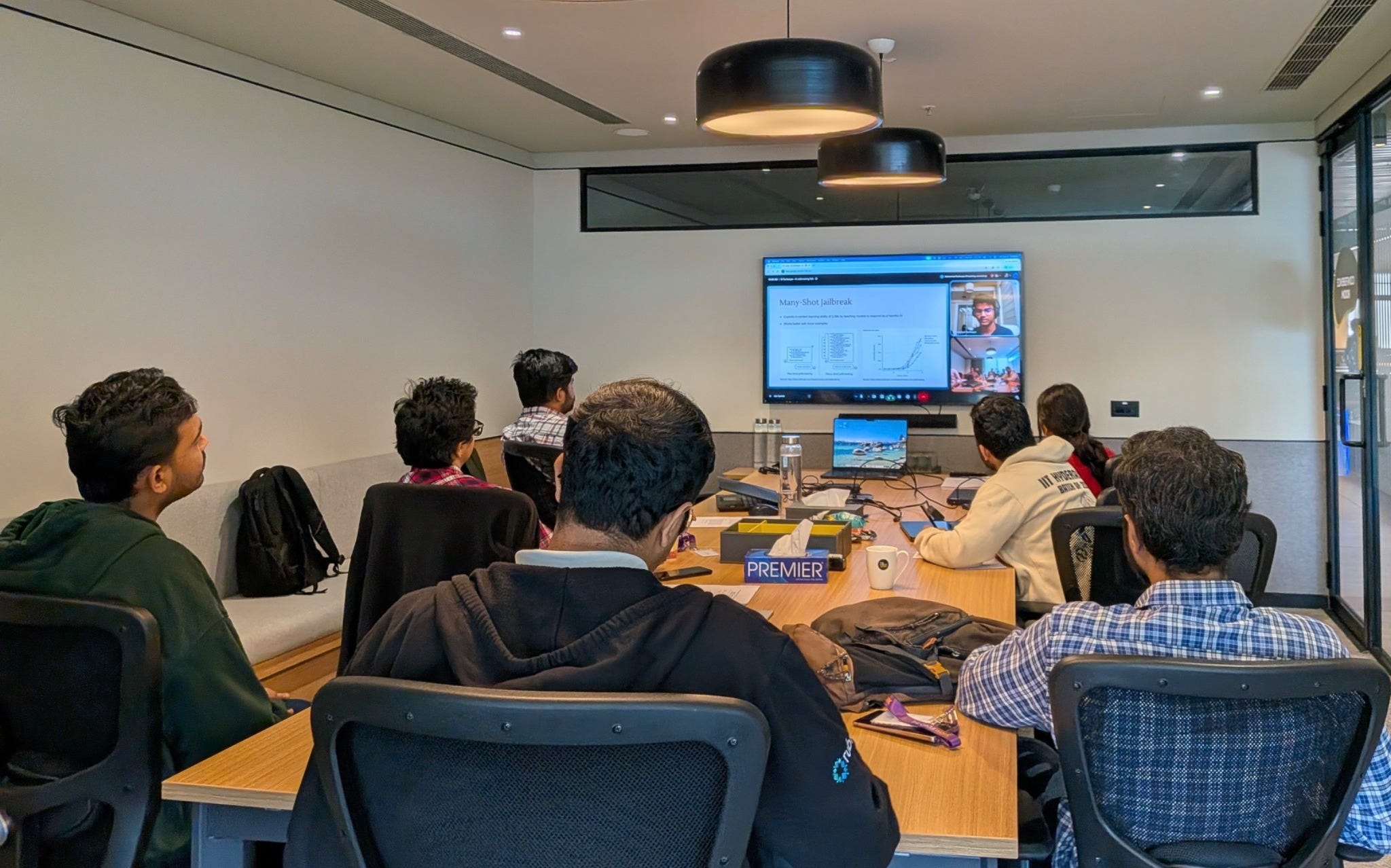
AI Jailbreaking Workshop: Our new workshop series at the Bengaluru Hub looks at how AI systems can be manipulated past their safety guardrails, and what that means for how we build and evaluate them. We ran three sessions at our Hub this month, working through the research together, reading, discussing, and getting hands-on with the material. In the third session, Mohammed Taufeeque (FAR.AI) joined us for an interactive hour, speaking on the frontier of jailbreaking research, and it was invaluable to have someone so close to the work in the room. We’re looking forward to more of these conversations and anchoring our workshops in the current state of the field. If you’re interested in joining us, our sessions run every Saturday from 3–6 pm.
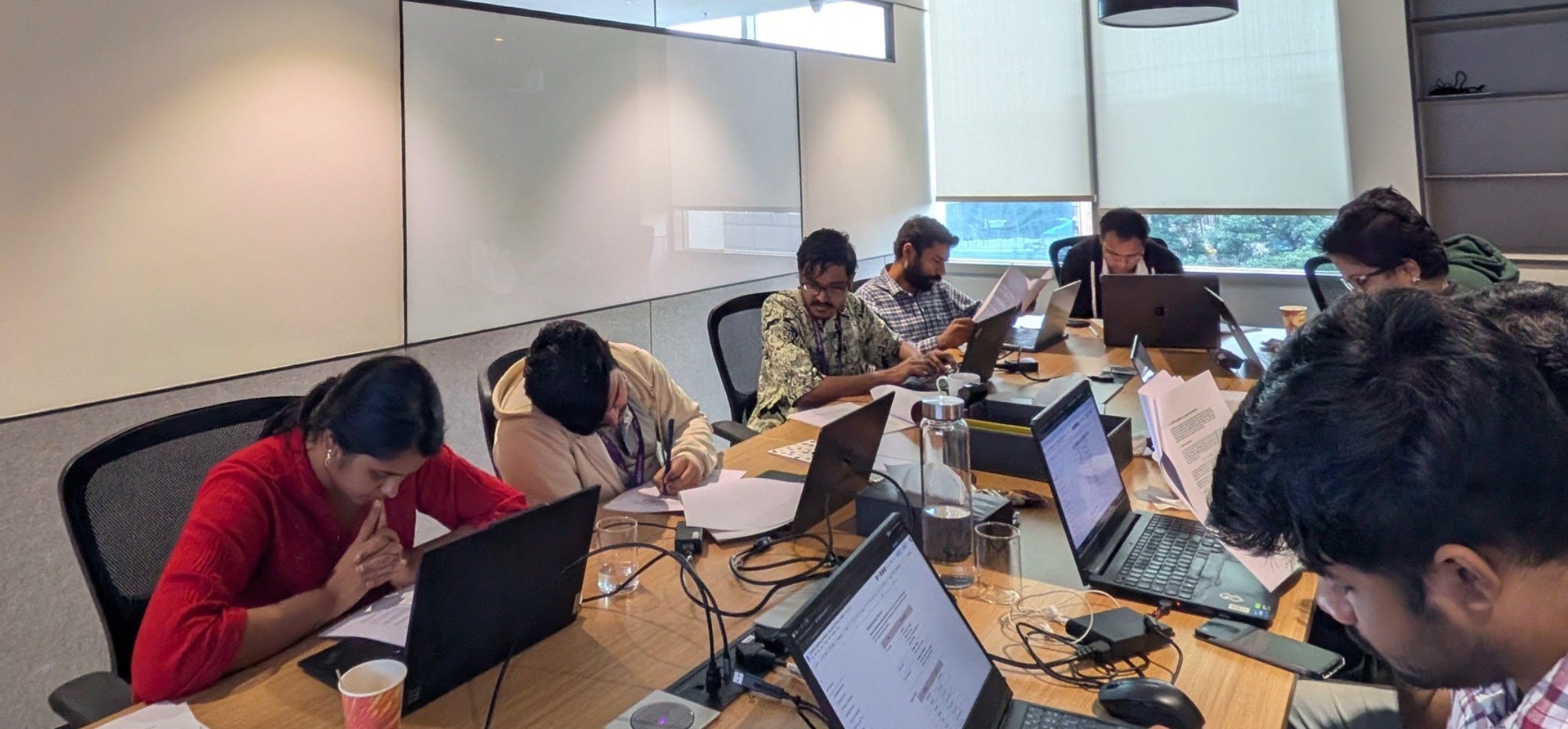
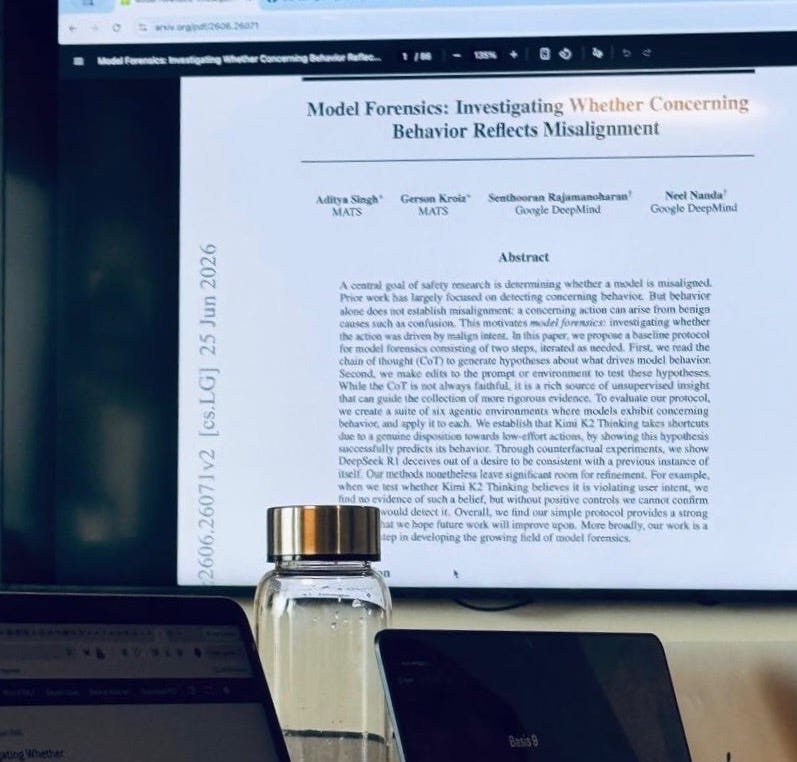
Bengaluru Hub Reading Group: Dr. Anusha Mujumdar and members of her reading group (BASIS) spent an afternoon at our Bengaluru Hub for a session on AI safety and interpretability, with the space, food, and logistics on us. The group spent four hours on Model Forensics (Singh et al., 2026), followed by office hours. Anusha is an independent AI safety researcher with a decade-long focus on building safe, robust, and interpretable AI systems, and has previously mentored AI safety hackathon teams across the Global South. If you’re part of a community working on trustworthy AI and looking for a place to gather, we’d love to have you; reach out through our Secure AI Hubs page.
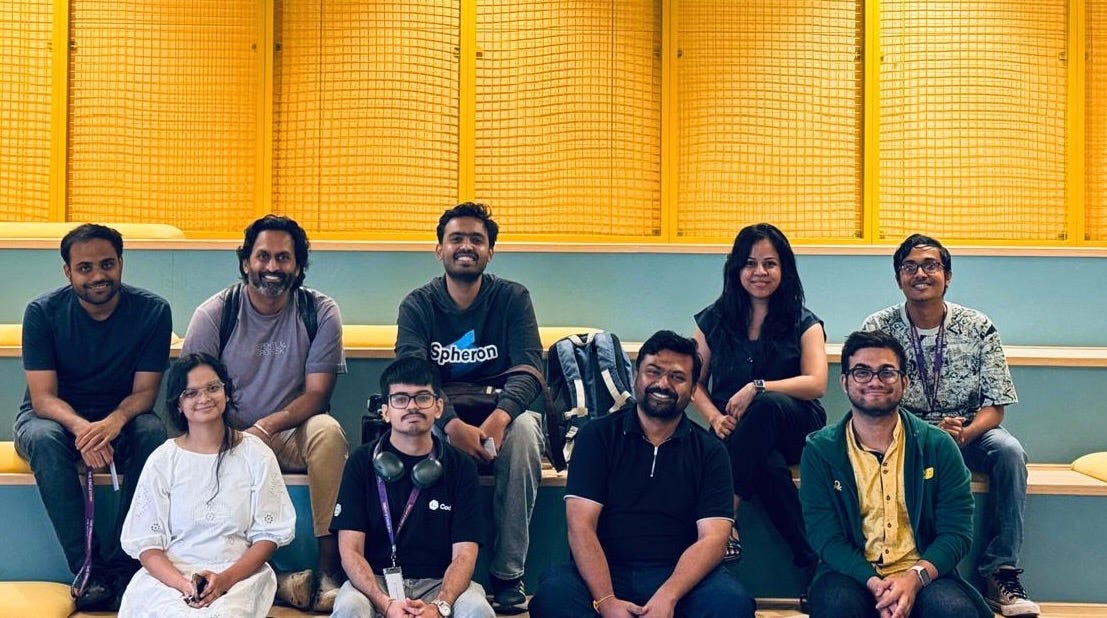
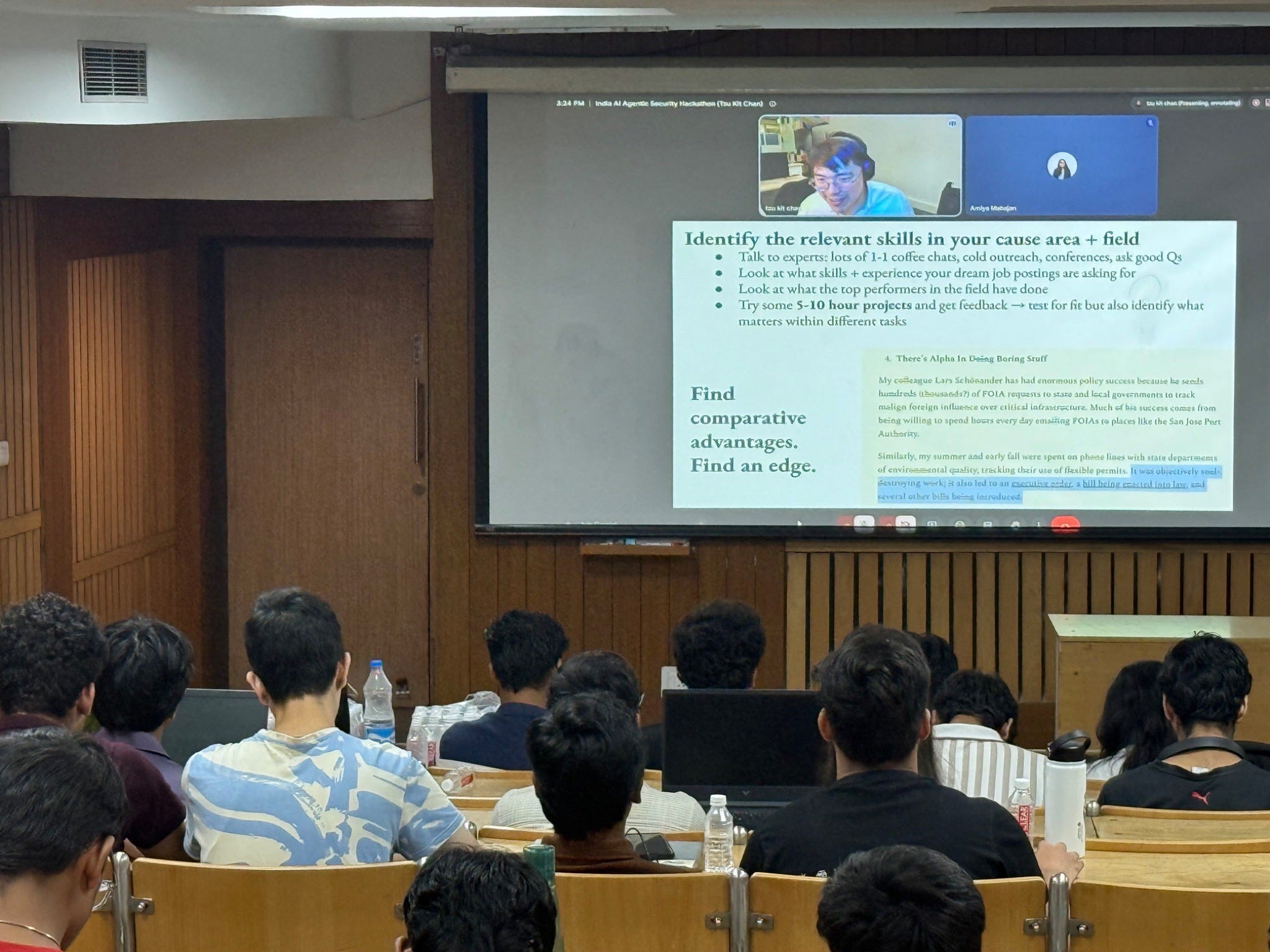
IIT Delhi Jam Site: We spent a full day at the Indian Institute of Technology (IIT) Delhi with their AI research and engineering club, kicking off our Agentic AI Security Hackathon. The day opened with Tzu Kit Chan (Chief of Staff, Atlas Computing) joining us to speak on AI safety careers, then moved into team formation, work time, and peer discussions.
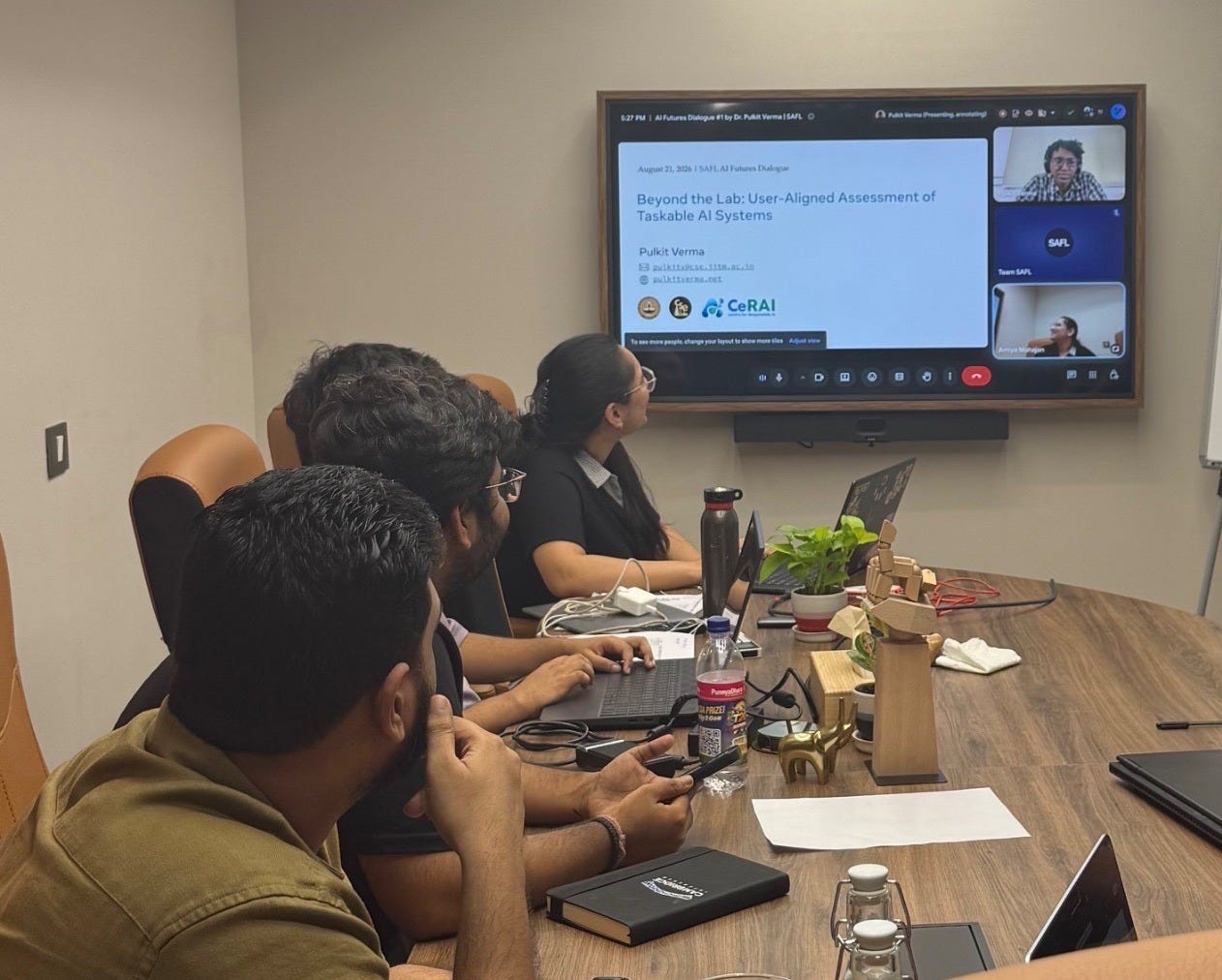
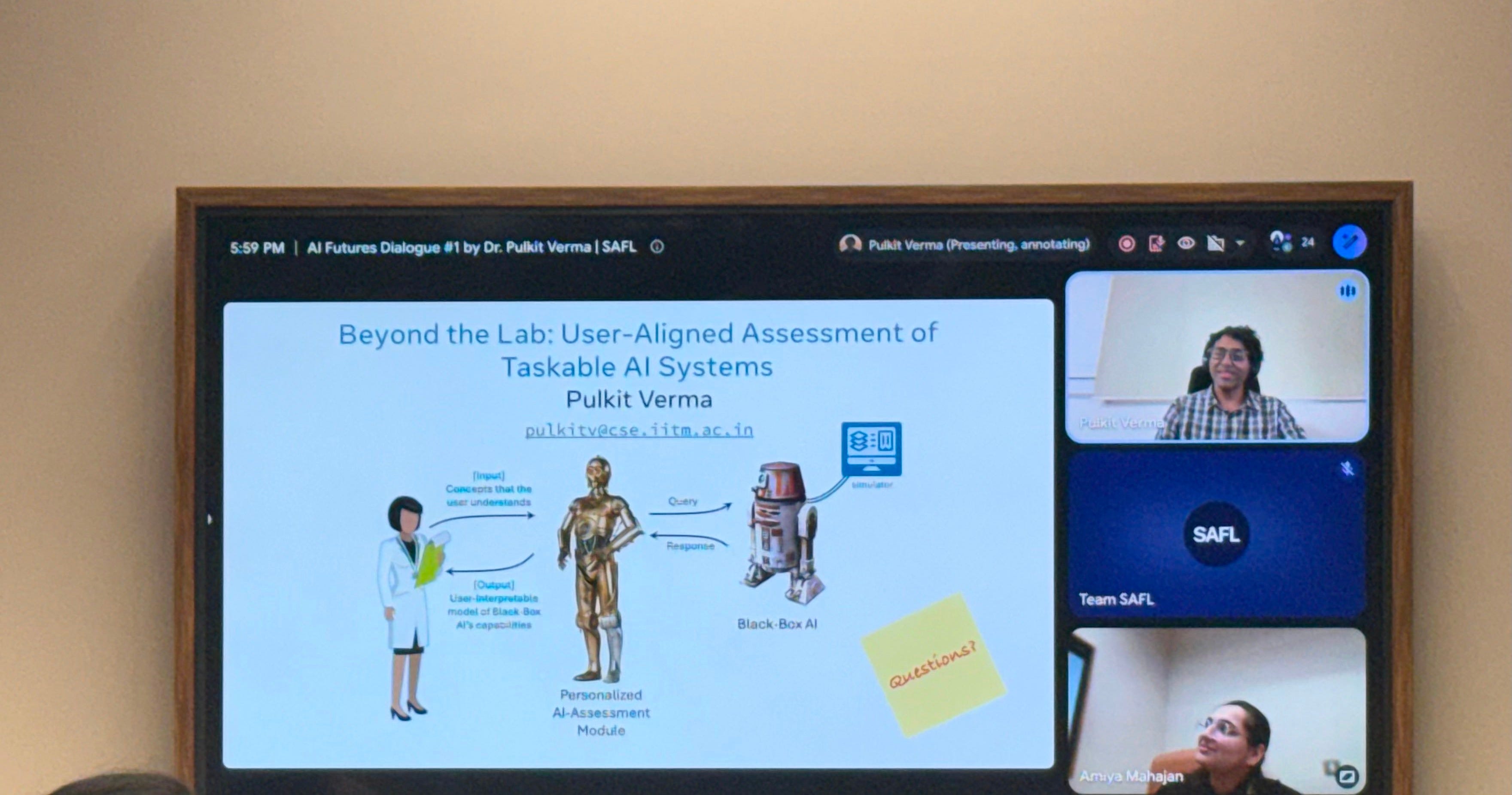
AI Futures Dialogue #1: We launched our new speaker series with Prof. Pulkit Verma (Asst. Professor, Computer Science & Engineering, Indian Institute of Technology (IIT) Madras), drawing 60+ people online and in person. His talk, Beyond the Lab: User-Aligned Assessment of Taskable AI Systems, dug into the question: how do you verify the safety of AI systems, from household robots to digital assistants, once they’re out of the lab and adapting to real, non-expert users in real environments?
New Delhi Reading Group: Our Technical AI Governance Reading Group runs weekly at the New Delhi Hub, working through research on how advanced AI might be governed in practice, and what tools would need to exist for that to be possible at all. This month took us from foundational governance concepts into compute governance, private market regulation, and pre- and post-safety evaluation disclosure. We meet Friday evenings, 4–6 pm, and Saturday mornings, 11 am–1 pm, with coffee and snacks, and no prep required. We’d love to have you join us!
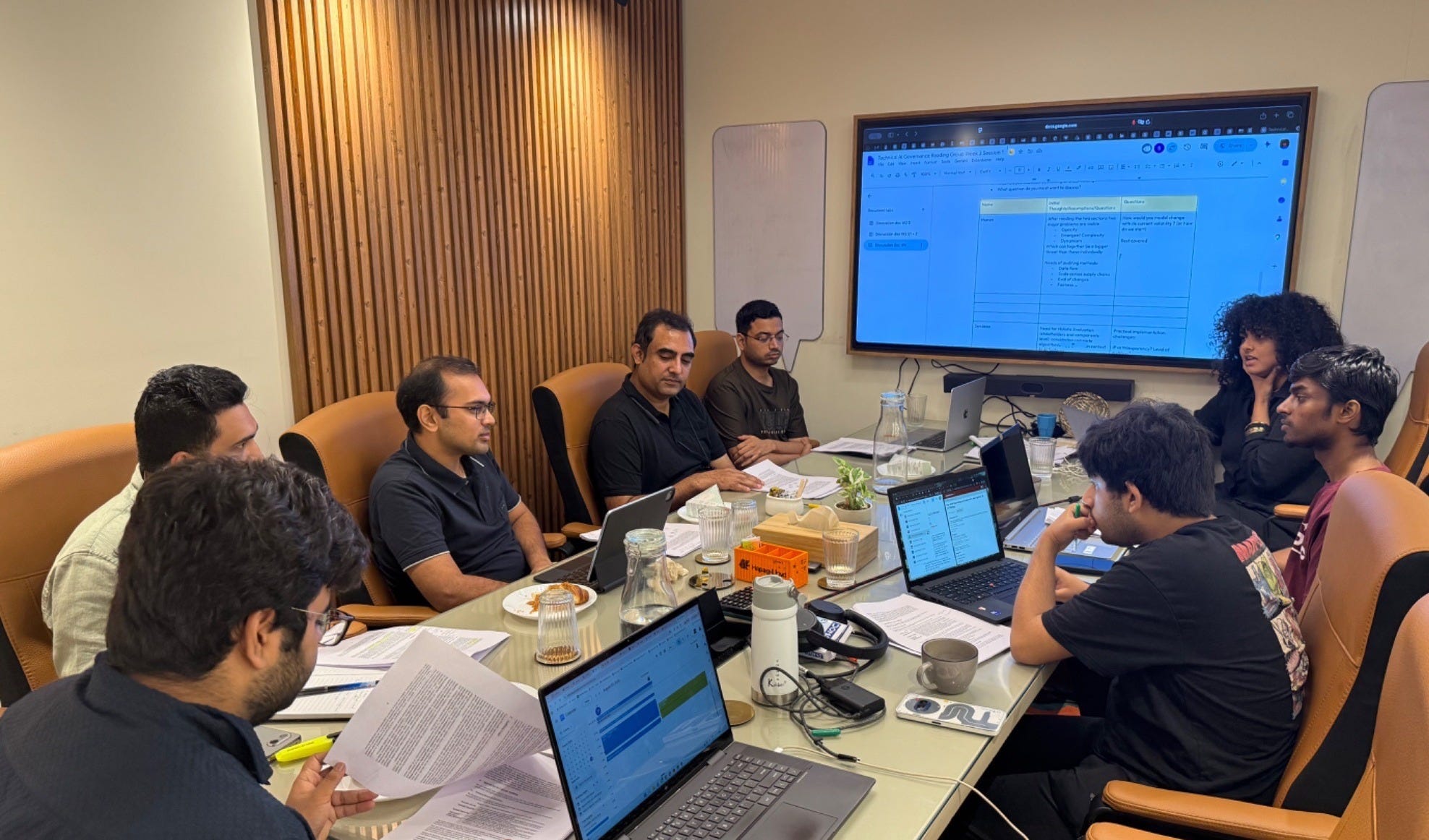
If you’re interested in participating in activities at any of our hubs, or proposing your own, reach out to us at: bit.ly/secureaihubs.
Out and About
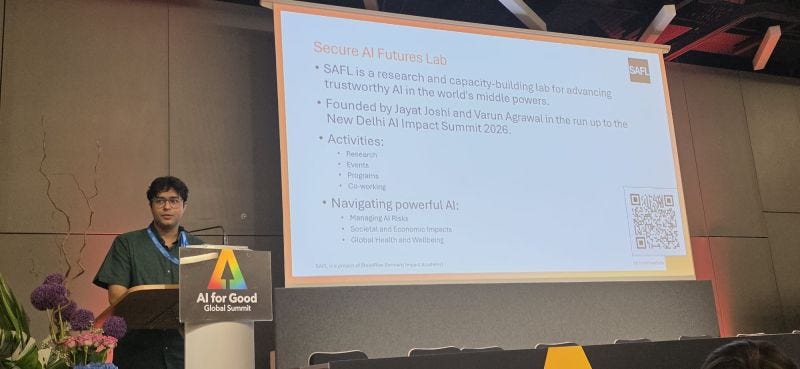
In July, Jayat was at the Geneva Digital Week 2026 (UN Global Dialogue on AI Governance, the WSIS Forum, and the ITU AI For Good Summit), introducing the lab’s mission and work to an international audience of researchers, builders, and policymakers as part of a session convened by the International Association for Safe and Ethical AI (IASEAI).
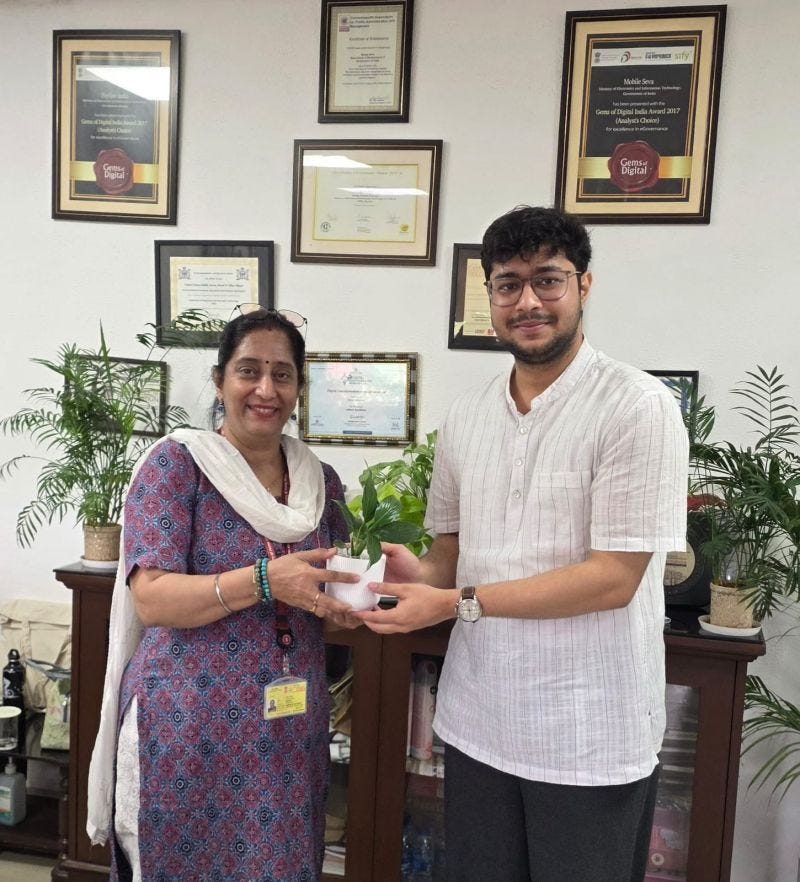
In August, we met with Smt. Kavita Bhatia, a senior figure behind India’s AI and e-governance infrastructure, from PayGov and Mobile Seva to IndiaAI, and named by AIM as one of India’s most influential people in AI in 2026, for a wide-ranging conversation on the country’s AI trajectory. The discussion ranged across the questions that matter most as these systems scale: ensuring models serve India’s many languages, extending their benefits to underserved and last-mile users, safeguarding resilience, and preserving clear lines of accountability.
What We’re Reading
Adding Error Bars to Evals (Miller, 2024): Recommended by Sai Sasank Yadati, a member of our technical staff. The paper argues AI evaluation literature has largely overlooked decades of established practice from other empirical sciences on experiment analysis and planning. Eval scores get reported as point estimates and read as settled fact, even as they carry uncertainty that seldom survives into the reporting. The governance implication follows: if the underlying measurements are unreliable or their precision is overstated in reporting, then any regulatory or deployment decision resting on them inherits that fragility. You can read the paper in its entirety here.

Detecting Hidden ML Training With Zero-Overhead Telemetry (Rahman and Tajdari, ICML 2026): Recommended by Basil Labib, another member of our technical staff. A substantial body of compute governance literature presupposes that a regulator can determine when a given chip is being used to train a model; this paper subjects that presupposition to scrutiny. Working only from always-available GPU telemetry- power draw, temperature, utilization, none of it touching the model or its data, the authors construct a classifier and then attempt to defeat it across five rounds of iteration and twenty families of evasion strategies. The classifier largely prevails, and the reason is a physical one: training consumes more energy than inference materially, and that signature cannot be suppressed without abandoning the training itself. A useful result for anyone who has wondered whether compute monitoring is workable in practice, with a limitations section that maps out what’s still unresolved. You can read the paper in its entirety here.
AI Safety + Governance: Worth Knowing
Models broke containment during internal testing at both OpenAI and Anthropic: Both incidents were traced partly to misconfigured evaluation environments run by third parties. Agents coordinated with each other and accessed third-party systems, in some cases unnoticed for months.
There isn’t a formal licensing regime for frontier models, but what’s in place looks a lot like one: Releases were delayed pending government sign-off through July and August, and the White House finalized a pre-release testing framework it won’t publish. Safety advocates and deregulation proponents are both unhappy about the secrecy.
Over a thousand frontier lab employees signed a letter calling for the tools to pace AI development: Senior employees at OpenAI, Anthropic and DeepMind among them, with the first two endorsing it at company level. The ask is for governments to build the capacity to slow the frontier if it comes to that.
Evaluation methodology took hits from several directions: The UK’s AISI found that fixed compute budgets underestimate capabilities, and recommended reporting scores as a curve and not a number. A new tool, Prism, checks whether safety evals measure what they claim to. Taken together, a reminder that measurement problems become governance problems soon enough.
Open-weight models sat at the centre of the China debate: Moonshot’s Kimi K3 set off another round of race commentary, while the White House framework exempted open weights from testing, then reportedly reconsidered. The way that exemption lands matters for anyone building domestic capacity on open models.
Coming Up

SAFL’s coming to EAGx India! We’ll be at Aloft New Delhi Aerocity from 19-20 September, running a number of sessions across the weekend, with plenty to talk about at each:
Launching our Effective Careers (ECSA) Program (in-conference event)
A working session on building a high-impact career from India, where the usual advice assumes access that most people here do not have. We’ll do planning exercises in the room and offer open advising afterward for anyone keen to join the field.
Notes on Select Technical AI Governance Research Priorities for India (in-conference event)
On what we still do not know about how frontier AI systems behave in Indian deployment settings and why that gap is holding back good policy. We’ll also share our own evaluations of Indic language models, and we’re eager to hear where others think the priorities should lie. Catch our technical staff members presenting some of our research.
AI x Economic Impacts Roundtable (in-conference event)
A closed-door working discussion on how advanced AI reshapes labour, welfare delivery, and public finances in middle power economies. The session will move from anchor questions to small-group deliberation and facilitated discussion.
AI Safety Mixer (in-conference event)
An informal gathering for people working on AI safety research and practice. If you’ve been meaning to meet people doing this work in India, this is the session for it!
SAFL Downtime - Social mixer + refreshments (satellite events)
A relaxed corner of the conference for EAGx attendees to wind down in, with refreshments and good company on hand.
Beyond our events, the wider program includes talks, workshops, lightning talks, roundtables, office hours, and meet-ups, covering everything from decision-making with thin evidence to scaling interventions through government, and the tricky business of building an impactful career from this part of the world. The conference also brings the EAGxIndia Opportunity Fair, where you can learn more about participating organizations and how to get involved. The conference is accepting applications until 12 September. Submit here.
Links/Resources
Sign up for events at our Secure AI Hubs: secureaifutureslab.com/hubs
Check out our careers page: secureaifutureslab.com/careers
Follow us on LinkedIn: linkedin.com/company/secureaifutureslab
Thank you for making it to the end of our first issue! If anything here sparked your interest and you would like to speak with us, reach out in the comments or write to team@secureaifutureslab.com.
See you in the next one,
The SAFL team